The Extended Brief
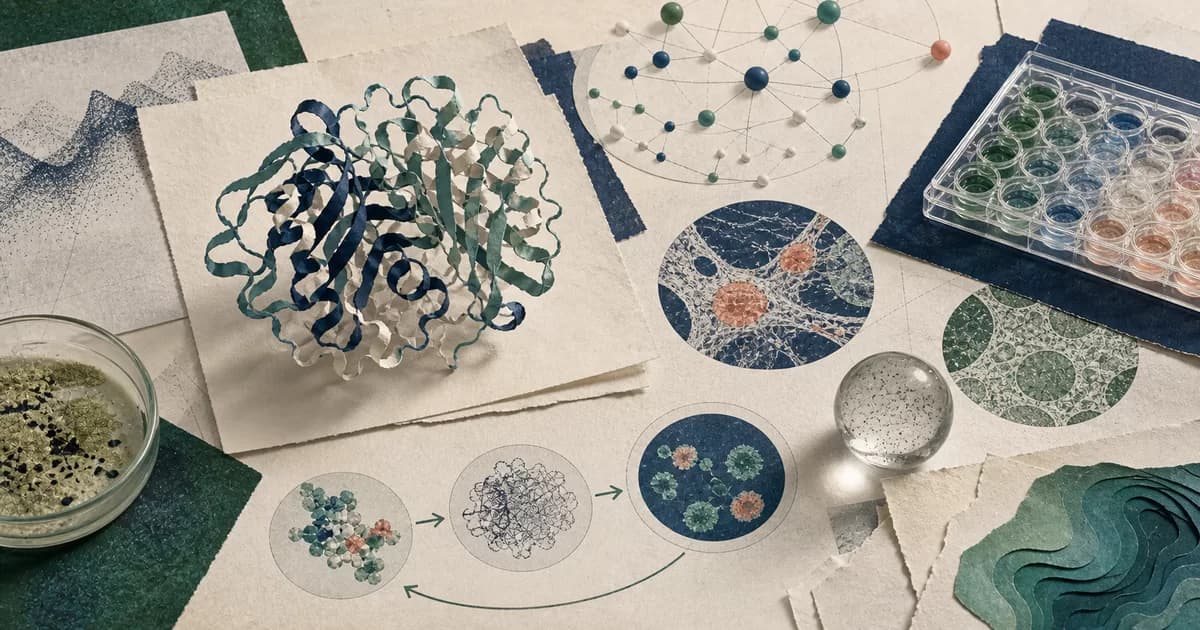
Claude discovers a novel enzyme system with CRISPR-like repeats
Brief by The AI News AI newsroom · Sep 23, 2026, 4:02 PM EDT edition
Original reporting by Hacker News · published Sep 23, 2026, 2:06 PM EDT
Anthropic says Claude found a previously unknown CRISPR-like enzyme system, suggesting general AI models could automate the class of biological discovery behind PCR and gene editing.
Key points
- Anthropic says Claude identified a novel enzyme system with CRISPR-like repeats, given only high-level direction from scientists. source ↗
- Anthropic formed a life sciences research group and built its own laboratory in spring 2026. source ↗
- The group searches DNA datasets for uncharacterized protein families, generates hypotheses at scale, and tests them in lab experiments. source ↗
- Anthropic likens the finding to restriction enzymes, Taq polymerase, and CRISPR, natural oddities behind biotech, PCR, and gene editing. source ↗
Practical applications
- Biology teams with large genomic datasets can pilot LLM-driven hypothesis generation to surface uncharacterized protein families for lab follow-up.
- Lab-automation builders can study Anthropic's agent-plus-wet-lab setup as a template for coupling model-generated hypotheses with experimental validation.
- Protein-engineering groups can track the enzyme's published characterization to assess it as a potential new molecular-biology or editing tool.
Context
CRISPR began as an unusual repeat sequence noticed in bacterial DNA and became the foundation of gene-editing medicines; restriction enzymes and Taq polymerase similarly went from natural curiosities to the basis of biotech and PCR. Anthropic's bet is that a general AI model scanning DNA datasets can systematize this historically serendipitous discovery process. The discovery claim is Anthropic's own, and the provided text includes no experimental details about the enzyme's function.
What to watch
- A peer-reviewed paper or independent replication describing the enzyme's sequence and function would confirm Anthropic's claim.
- Follow-up disclosure of the lab validation results would show whether the agent-plus-lab workflow generalizes beyond one finding.
Related briefs
- Alibaba open-sources AI model that can detect cancer and nearly 150 conditions
- New Records Reveal Problems with Medicare’s AI Prior Authorization Experiment
- A Pragmatic Randomized Trial of an EHR-Integrated Generative AI Chart Summarization Tool for Ambulatory Clinicians
- Generative design of novel bacteriophages with genome language models [R]
Editorial score 4.1 / 5 · significance 4.0 · novelty 4.5 · edge 4.0 · perspective 4.0
Topics: AI in health & biotech · AI research
Evidence basis: Reviewed from the article's full text
This brief was written by The AI News AI newsroom in its own words after two independent AI reviewers voted the story worth reading. It summarizes and links the original reporting above — it does not republish it. See the methodology or the corrections ledger.